

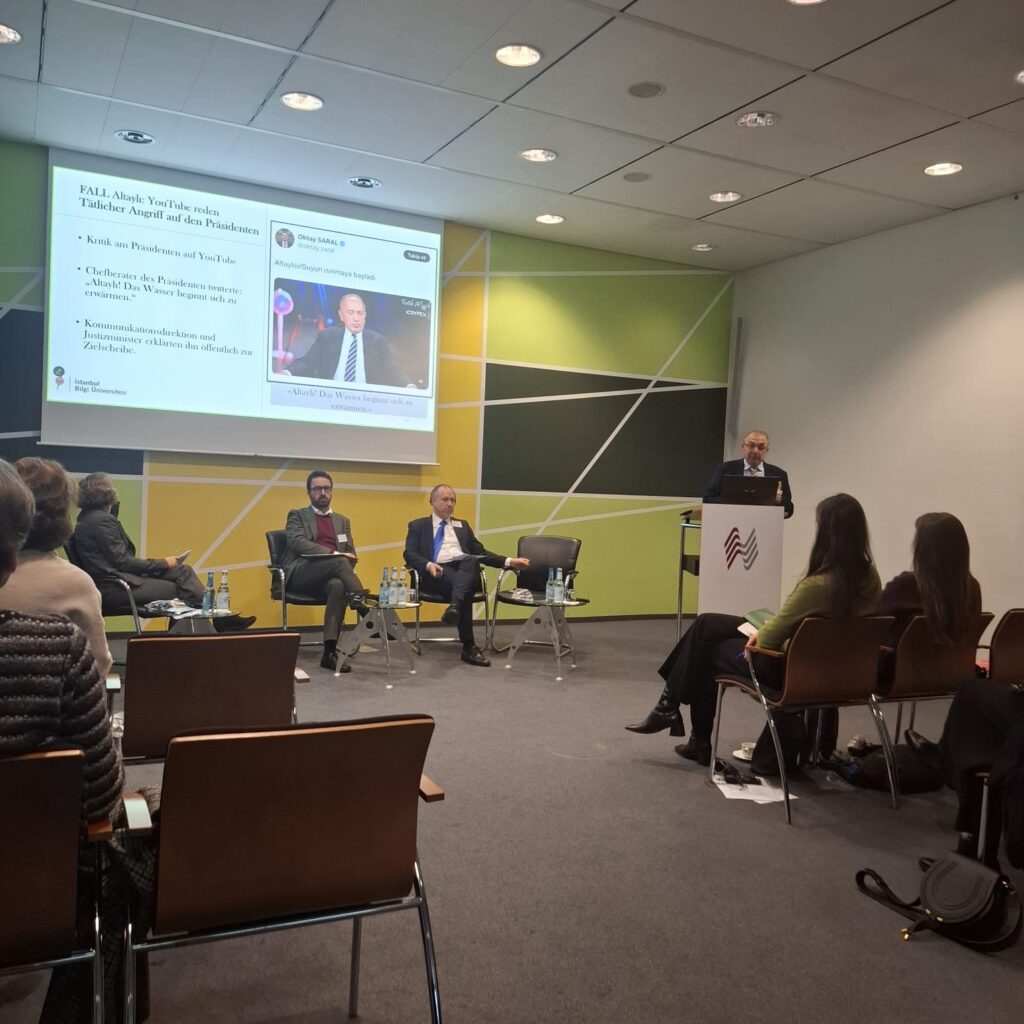
In Berlin we took part in the panel entitled “Die Lage der Rechtsstaatlichkeit in der Türkei” organized by the Deutscher Anwaltverein e V in cooperation with Amnesty International and were able to bring both the voice of our organization and that of human rights defenders living in exile directly into the German legal public sphere. At the event held in the DAV Haus the crisis of the rule of law in Turkey the pressure on the legal profession and the restriction of freedom of expression through criminal law were discussed intensively throughout the day while we drew particular attention to human rights violations in the context of diaspora and exile using concrete case examples.
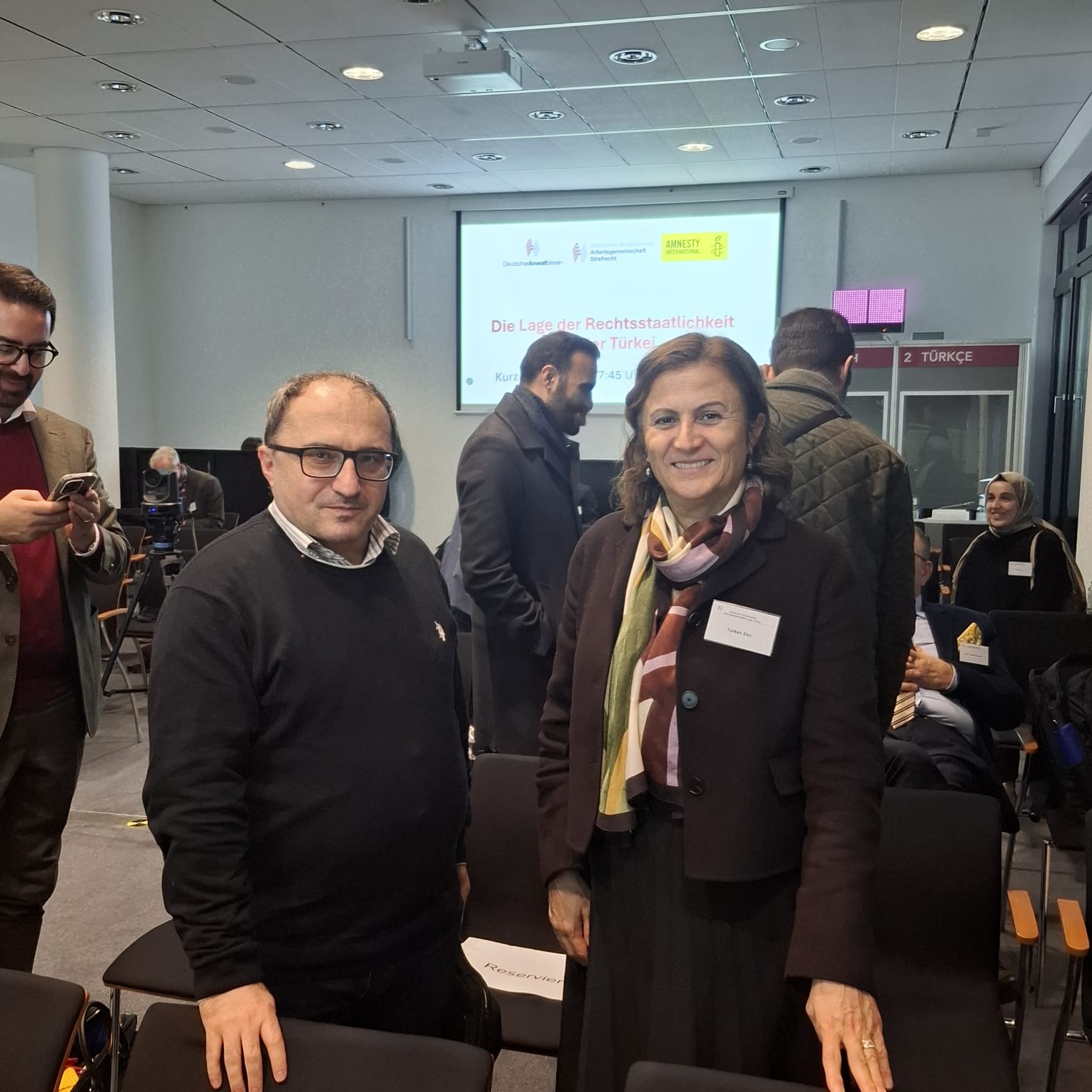
At the beginning the president of the Deutscher Anwaltverein Stefan von Raumer and the representative of Amnesty International Amke Dietert delivered introductory remarks in which they pointed to the deepening erosion of the rule of law in Turkey. This was followed by a tribute to the late president of the Diyarbakir Bar Association and human rights defender Tahir Elçi. In his memory his wife attorney founder of the Tahir Elçi Human Rights Foundation and CHP member of parliament for Istanbul Türkan Elçi set the tone of the program with a very moving and at the same time remarkably powerful keynote.
This part of the event was for us not only an emotional moment but also an opportunity to engage with the historical and personal dimension of the struggle for justice in Turkey placing memory and the cost of this struggle at the center. During the breaks between the panels we had the opportunity for a personal exchange with Türkan Elçi. We spoke in detail about the current state of legal practice in Turkey the use of criminal law to suppress freedom of expression and the needs of those lawyers and human rights defenders who continue their fight for justice in exile. In these conversations we presented both concrete cases from our work and our documentation and support activities for communities in exile.
We were able to highlight two central points in particular. First we stressed that the amnesty and justice reform initiatives that have been discussed in Turkey for many years can only have truly transformative potential if any future amnesty includes all groups and does not exclude anyone from the outset. Models that are built on exceptions and exclusions create new injustices and deepen existing divides. Second we made clear that narrowly framed legal measures which respond only to current political dynamics and short term power interests cannot provide a lasting solution and cannot lead to genuine social peace or to a sustainable perspective of justice. We underlined that the legal order must be rebuilt not through isolated minor corrections but on the basis of a comprehensive and human rights oriented paradigm.
Our participation in this panel therefore went far beyond a passive role as part of the audience. With our inclusive understanding of justice in the amnesty debate with the concrete experiences of the exile community and with our professional expertise in the field of digital human rights monitoring we were present as active and shaping actors both in the panels and in the discussions on the margins of the event. In this way we helped to ensure that the voices of all those who are fighting for the rule of law in Turkey became more visible and more audible at this gathering in Berlin and we were able as an organization to play a significant role in shaping the content of this discussion.
No comment yet, add your voice below!